
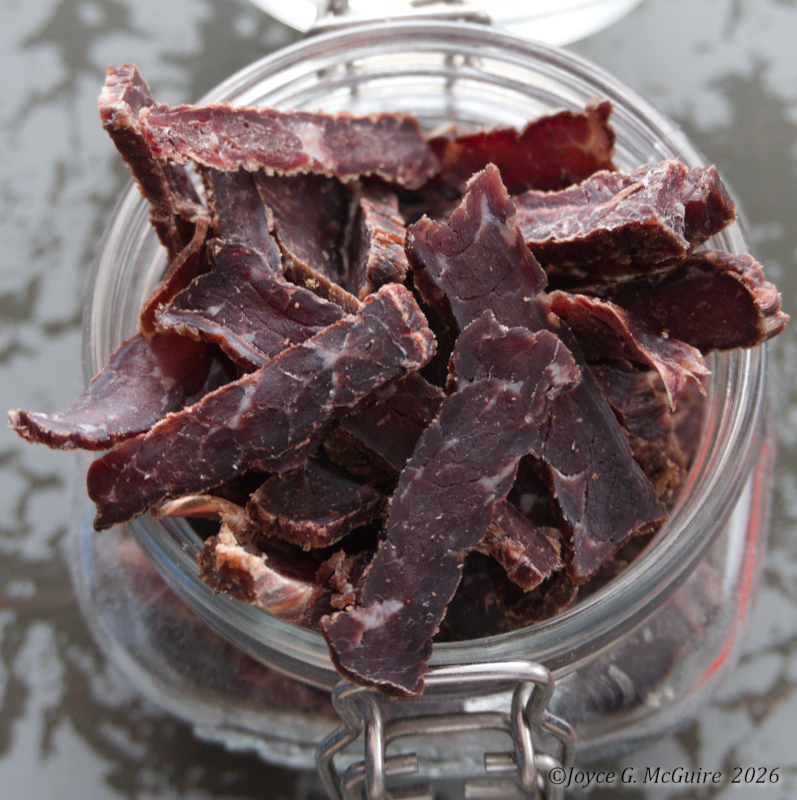
Original biltong is our favorite, but we wanted to try something different. So this batch is made with Himalayan Sea salt and vinegar only. Very good, especially if you need to watch what spices you eat. Be sure to keep the salt (non iodized) at 10-12 grams per 1 pound of meat.
The best meats for biltong are (in order) bottom round/silverside or top round/topside then eye of round.
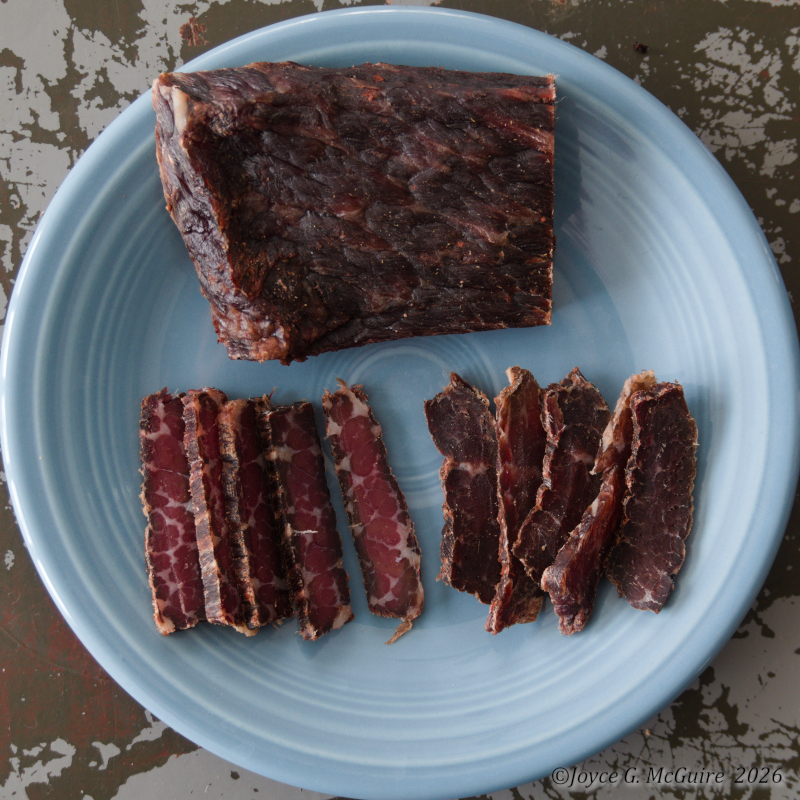
Piece of uncut biltong on top. Redder meat on left is dried to 55% and darker is closer to 60% dried.
- 2.5 pounds eye of round roast or bottom steak
- 25-28 g Coarse Pink Himalayan sea salt
- 1/4 c apple cider vinegar or Malt Vinegar
- 1/2 tsp garlic optional
- Grind salt into chunks. The chunks should be small grains, but not coarsely ground.
- Using a sharp knife, following the grain of the meat, cut into 1 inch (2.5cm) thick lengths and place in a glass casserole dish.
- Sprinkle with vinegar and then season with salt. It is okay not to use all the vinegar, but be sure to use all the salt.
- Rub everything in, making sure that meat is covered with salt.
- Cover dish and let meat marinade in refrigerator for 8-24 hours.
- Remove the meat from the container and blot dry with paper towels.
- Weigh each piece and place in dehydrator.
- Dry at 95 degrees until biltong is about 55% their original weight or further if you prefer dryer.
- How "wet" or dry you dehydrate is a matter of personal taste. Dry longer if desired.
- If you press the meat gently, you feel any give, they are still "wet" inside.
- Store in refrigerator unless dried more than 65%.
We store ours in the refrigerator because we dry to 55%. If I wanted to use for backpacking, I would dry closer to 35% of original weight (original weight x 0.35) or 65% weight loss (1-0.35).
Most places recommend at least 50% of weight loss. We usually use this formula: Original weight x 0.55 or 45% weight loss (1 - 0.55). If the meat seems a little red, we just dry it a little longer.